

Yes, cotton is generally good for sensitive skin — but only when it is the right kind of cotton, processed cleanly, and woven in a way that works with your skin rather than against it. The fiber itself is soft and breathable, but the weave, the dyes, the chemical finishes, and even how you wash it can completely change that experience.
If you have ever bought a cotton kurta, worn it once, and still ended up with a rash or itchy patch, this is the article you needed before that purchase. Let us go through what actually matters.
Why Cotton Has a Reputation for Being Skin-Friendly
Cotton is a natural plant fiber. It does not trap heat the way synthetic fabrics do, it allows air to circulate against your skin, and it absorbs moisture instead of pushing it back onto you. For Indian weather, where humidity and heat are a fact of daily life from March to September, that matters enormously.
Dermatologists widely consider loose-woven, unbleached, or lightly processed cotton to be one of the safer fabric choices for people prone to contact dermatitis or textile dermatitis — skin reactions triggered by direct contact with a fabric or its chemical finishes. The fiber itself is not inherently allergenic, which is why it shows up in so many recommendations for eczema-prone or reactive skin.
But here is the part most fabric guides skip: the fiber is only the starting point. What happens to cotton between the field and your wardrobe changes everything.
Not All Cotton Is Equal: Weave, Grade, and Processing Change Everything
Think of cotton less as a single fabric and more as a category with a wide spectrum. Here is what distinguishes one cotton garment from another when sensitive skin is involved.
Weave Type Matters More Than Most People Realize
- Muslin and mulmul: Extremely fine, open-weave cotton. Feels almost weightless against skin. Excellent breathability, minimal friction. This is why it has been used for newborns and post-partum recovery for generations across South Asia. For sensitive skin, this is one of the gentlest options in the cotton family.
- Voile: Lightweight and sheer, with a softer drape than poplin. Less friction than tighter weaves. A good everyday choice for reactive skin.
- Poplin: A tighter, crisper weave. Durable and smooth, but less forgiving in high-humidity conditions where you are sweating. Can trap moisture against skin if the silhouette is fitted.
- Jersey: Stretchy, knit cotton. Hugs the body, which increases surface contact. Can feel soft, but the friction from stretch against skin folds (underarms, waist) can aggravate eczema or heat rash in Indian summers.
Handwoven Cotton vs Mill-Woven Cotton
This distinction is almost never discussed in mainstream fabric guides, and it is a meaningful one. Handloom and handwoven cotton, the kind produced on traditional looms in weaving clusters across India, is typically woven without the chemical sizing agents used in industrial mill production. Sizing agents are starch-like coatings applied to make threads run faster through machines. They are usually washed out, but residues can sit in the weave and irritate sensitive skin.
Handwoven textiles also tend to have a slightly irregular, breathing weave structure, which means more air circulation and less heat buildup. It is one of the reasons traditionally woven fabrics like handblock-printed cottons, Ikat, and Sanganeri prints have been worn in Indian summers for centuries. The fabric was designed for this climate.
Organic vs Conventionally Processed Cotton
Conventional cotton farming uses pesticides and synthetic fertilizers, and the fabric is then often treated with chlorine bleach, optical brighteners, synthetic dyes, and formaldehyde-based anti-wrinkle finishes. Each of these is a potential skin irritant, especially for people with contact dermatitis.
Organic cotton, certified under standards like GOTS (Global Organic Textile Standard), is grown without synthetic pesticides and processed with tighter restrictions on chemical finishes and dyes. For sensitive skin, this makes a genuine practical difference, not a marketing one. GOTS certification, in particular, covers the full production chain, so it is a more reliable marker than simply the word "organic" on a label.
When Cotton Can Irritate: The Overlooked Conditions
If you tried cotton and still got a rash, the cotton probably was not the problem. Here are the more likely culprits.
Synthetic Dyes and Optical Brighteners
Azo dyes, used widely in mass-produced textiles, are a known trigger for textile dermatitis. Optical brighteners, the chemicals that make whites look extra white and colors pop under fluorescent light, sit on the surface of fabric fibers and come into direct contact with skin. Neither of these is inherent to cotton. They are processing choices, and they are avoidable.
Natural dyes, including the plant-based pigments used in traditional Bagru handblock printing and many regional Indian craft techniques, have a different chemical profile. They are not automatically gentle for every individual, but they lack many of the reactive synthetic compounds found in industrial dye baths. If your skin has reacted to brightly colored cotton in the past, the dye is worth investigating before you give up on cotton entirely.
Recommended for you
-
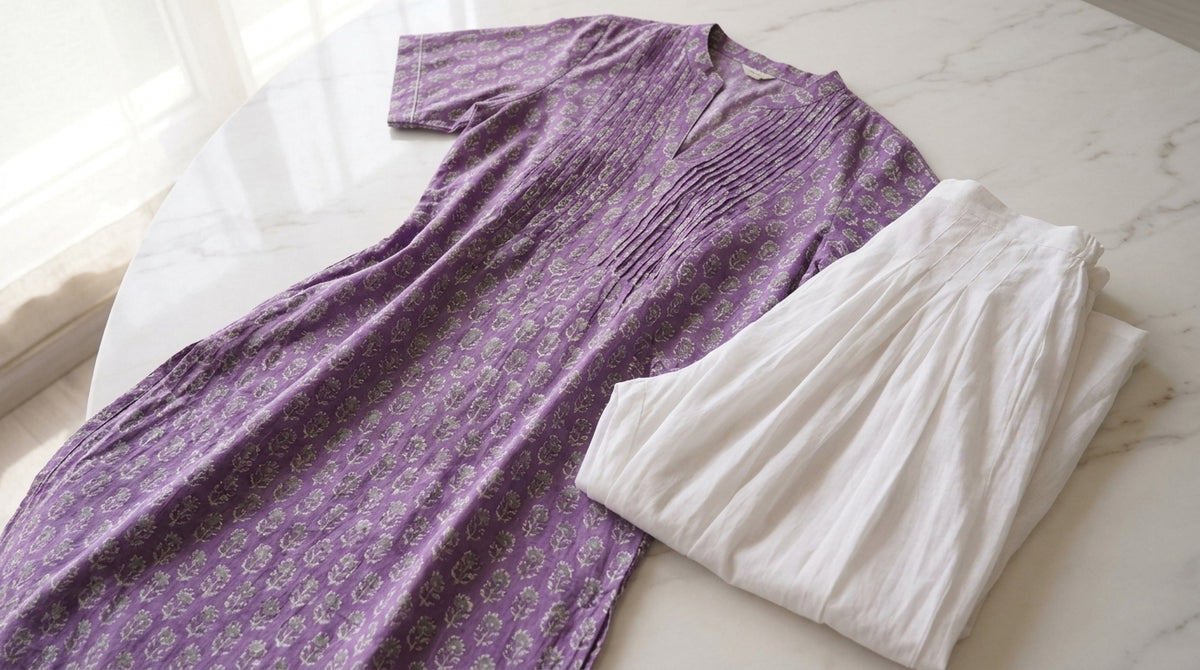
 Purple Bloom Comfort Cotton Kurta
100% cotton kurta with skin-friendly sanganer craft — loose, breathable fit.
-
 White Mulmul Cotton Dhoti Pant
Airy mulmul cotton dhoti pant — ultra-light weave ideal for sensitive skin.
-
 Mehrangini Cotton Kurta
Hand block printed cotton kurta from Bagru using natural, skin-safe processes.
Poorly Rinsed Laundry
Detergent residue is one of the most overlooked causes of fabric-related skin reactions. Cotton's absorbent nature means it holds onto soap if not rinsed thoroughly. If you are experiencing itching in specific pressure points (collar, waistband, cuffs), try an extra rinse cycle and switch to a fragrance-free, low-enzyme detergent before assuming the fabric is the issue.
Tight Weaves and Sweat Trapping in Indian Summers
A tight-weave cotton kurta in a fitted silhouette in peak May humidity is a different skin experience from a loose mulmul kaftan in the same heat. When sweat cannot evaporate, it sits against the skin and can cause heat rash, folliculitis, or simply persistent irritation. The solution here is not to avoid cotton, it is to choose a more open weave and a relaxed silhouette. Anti-fit and oversized cuts exist for more than aesthetic reasons. They genuinely perform better for skin comfort in Indian weather.
Can You Actually Be Allergic to Cotton Itself?
True cotton fiber allergy is extremely rare. Most reactions attributed to cotton are actually reactions to the chemical finishes, dyes, or detergent residues on the fabric. In documented cases of contact dermatitis from textiles, the culprit is almost always a processing chemical, not the cellulose fiber of cotton itself. If you suspect a fabric allergy, a patch test done by a dermatologist can identify the specific trigger.
Cotton for Babies and Young Children: A Note on Mulmul
If you are a parent shopping for a newborn or infant, the fabric choice is even more significant. Baby skin is thinner, more permeable, and more reactive to chemical irritants than adult skin. Mulmul (also called muslin in some regions) is one of the most widely trusted fabrics for newborn clothing for a reason: it is extremely fine, hypoallergenic in its minimally processed form, and becomes softer with every wash.
For Indian babies, where the climate adds heat rash and prickly heat to the list of things to manage, mulmul and soft unbleached cotton are the practical default. The key is to choose pieces made from fabric with minimal synthetic dye and no optical brightener treatment, and to pre-wash before first use.
What to Look for When Buying Cotton for Sensitive Skin
Here is a practical checklist for anyone shopping with skin sensitivity in mind:
- Look for open or medium weaves: mulmul, voile, or soft handloom cotton over stiff poplin or jersey for daily wear.
- Prioritize natural or plant-based dyes when possible, especially for garments worn directly against the skin.
- Choose loose, anti-fit silhouettes over fitted cuts to allow airflow and reduce friction.
- Pre-wash all new cotton clothing before wearing, to remove manufacturing residues.
- Look for GOTS certification or clear labeling of organic processing if chemical sensitivities are a concern.
- Avoid heavily printed or vibrantly dyed synthetically treated cotton if you have known azo-dye sensitivity.
- Check whether handblock prints use natural dyes (often indicated in product descriptions by terms like Bagru or mud-resist printing).
Cotton Kurtas and Sensitive Skin: A Natural Pairing (When Done Right)
The ethnic kurta and tunic category is where cotton absolutely earns its reputation as the go-to skin-friendly fabric, because the traditional silhouette is already designed for airflow. A straight-cut or A-line kurta in handwoven cotton sits away from the body, allows sweat to evaporate, and creates minimal friction against the skin. Combine that with natural dyes or carefully chosen reactive dyes, and you have something that has been trusted by generations of women across India because it genuinely works.
If you want to go deeper into how to choose the right kurta fabric and cut for your lifestyle and skin comfort, this guide on Kurta Designs for Women: How to Choose the Right Silhouette, Fabric, and Occasion covers it in detail.
At Safeera, the fabrics at the core of our collections, cotton, mulmul, linen, and handblock-printed textiles from traditions like Bagru, Sanganeri, and Bandhej, are chosen specifically because they perform in Indian weather and feel considered against the skin. Comfort-first is not a tagline for us; it shapes which fabrics we source and which silhouettes we design. Our kaftans, co-ords, and shift dresses are built on the premise that clothing should feel like a relief to put on, not something you endure.
Quick Comparison: Cotton Types for Sensitive Skin
- Mulmul / Muslin: Best for sensitive and baby skin. Ultra-light, breathable, softens with washing.
- Handloom cotton: Less chemical sizing, more irregular weave structure means better airflow. Excellent choice.
- Organic GOTS-certified cotton: Lower chemical load from farm to fabric. Worth seeking out for reactive skin.
- Voile: Lightweight and skin-friendly. Good for kurtas and scarves worn against the neck and chest.
- Conventional mill poplin: Can be fine if pre-washed, but higher risk of optical brightener and sizing residue.
- Jersey cotton: More friction, less airflow in fitted cuts. Less ideal for heat rash-prone or eczema-prone skin.
Explore cotton styles made for Indian skin — breathable weaves, clean crafts, and natural prints.
Frequently Asked Questions
Is 100% cotton better for eczema?
100% cotton is often recommended for eczema-prone skin because it avoids synthetic fibers that trap heat and cause friction. However, the weave, dyes, and chemical finishes matter just as much as the fiber content. Loosely woven, minimally processed, or organic cotton is likely to be gentler than tightly woven or heavily dyed 100% cotton.
What are the disadvantages of 100% cotton for skin?
In humid climates, tightly woven or fitted cotton can trap sweat against the skin and contribute to heat rash. Cotton also holds onto detergent residue if not rinsed well, which can cause irritation. Heavily dyed or chemically finished cotton carries a risk of contact dermatitis from the processing chemicals, not the fiber itself.
Can you be allergic to cotton?
True allergy to cotton fiber is very rare. Most skin reactions blamed on cotton are actually reactions to synthetic dyes, optical brighteners, anti-wrinkle finishes, or laundry detergent residues on the fabric. If you suspect a textile allergy, a patch test with a dermatologist can identify the specific trigger.
Is organic cotton worth it for sensitive skin?
Yes, for genuinely sensitive or reactive skin, organic cotton certified under standards like GOTS is meaningfully different from conventional cotton. It is grown without synthetic pesticides and processed with tighter restrictions on chemical finishes and dyes, which reduces the overall chemical load the fabric carries.
Are handblock-printed fabrics harsh because of the dyes used?
Not necessarily. Traditional handblock printing techniques like Bagru often use natural or plant-based dyes, which have a different chemical profile from industrial synthetic dyes and are generally considered gentler. The key is to check whether the print uses natural dyes and to pre-wash the garment before wearing.
What is the best cotton fabric for Indian summers and sensitive skin?
Mulmul (muslin) and loosely woven handloom cotton in relaxed silhouettes are well-suited for Indian summers with sensitive skin. They allow airflow, minimize sweat trapping, and create less friction than tighter weaves or fitted cuts. Natural or minimal-dye options add another layer of skin safety.
Is mulmul safe for newborn and baby skin?
Mulmul is widely used for baby clothing across India because it is extremely fine, lightweight, and breathable. In its minimally processed form it is considered very gentle on newborn skin. It also softens further with each wash. Look for mulmul baby clothing with minimal synthetic dye treatment for the safest choice.


